In the ever-evolving landscape of AI adoption for business workflows, a subtle shift is taking place. While OpenAI's models remain ubiquitous, more founder-led B2B teams are exploring Anthropic’s Claude as a complementary AI tool that excels in contexts requiring deep reasoning and complex decision-making. Yet, as anyone working extensively with Notion pages and databases as their system of record knows, not all AI tools fit all jobs equally well.

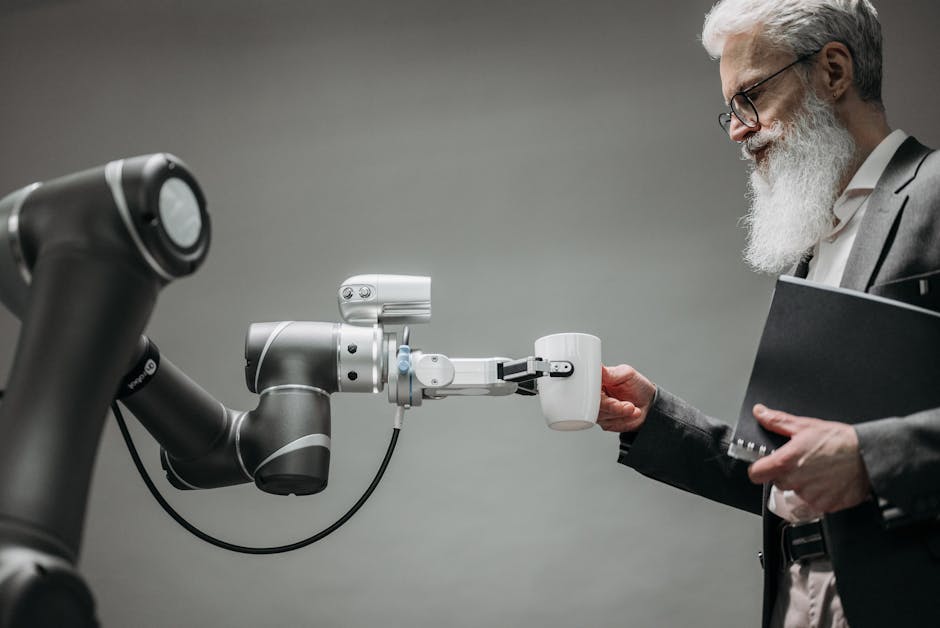
This brings us to a nuanced question: Why does Claude feel so great for reasoning tasks but can become annoying or inefficient when deployed for day-to-day Notion edits? To understand this, we need to explore how AI integrates with knowledge workflows, the importance of company context over pure model power, and the significance of a well-defined operating model that separates “brain” and “body” functions in your business system.
The AI Adoption Shift Toward Claude in Business
Historically, many teams have defaulted to OpenAI’s GPT models for a wide spectrum of tasks — from generating marketing copy to automating basic data entry. That “one model fits all” approach often overlooks the strengths and weaknesses of AI models relative to specific job requirements. Pretty simple.. Claude, developed by Anthropic, is gaining traction because it offers a distinct advantage: it excels in careful, nuanced reasoning and maintaining intentional guardrails that better align with human values and complex business logic.
For founder-led teams that rely on AI as a reasoning partner—interpreting market data, drafting strategic plans, or synthesizing meeting notes—Claude’s strengths become particularly apparent. The model demonstrates a capacity to hold multiple steps of logic, question assumptions intelligently, and provide clearer explanations. This has led many companies to incorporate Claude into workflows that demand high cognitive load and sensitivity.
Context Beats Model: Company Knowledge as Fuel
One key to Claude’s success in reasoning is how businesses feed it relevant company context. Unlike generic AI use cases, where an LLM runs with minimal prompt history, teams building on the Notion Developer Platform agents can create intelligent assistants that read and write Notion pages and databases to stay current and deeply informed about the company’s priorities, processes, and historical data.
Using Notion as a system of record means the AI isn’t operating in a vacuum. Instead, it modernoperators.com pulls from fresh, detailed knowledge embedded within the company’s own workspace — project status, customer feedback, product specs, and even cultural nuances. This evolving context is what fuels Claude’s precise reasoning, allowing it to provide insights that feel tailor-made rather than generic.
- Claude’s strength: excels when trained or prompted with rich, company-specific knowledge bases. OpenAI GPT models: impressive generalists, but often require extensive prompt engineering to match context depth.
The Two-Layer Operating Model: Brain and Body
In the world of company operating systems—especially those built on Notion—a mental model that helps distinguish workflows is the two-layer operating model that separates “brain” and “body” functions.
LayerFunctionAI Tool Fit Brain Thinking, reasoning, higher-order decision making Claude – excels at complex, context-rich reasoning tasks Body Routine execution, mechanical editing, data entry Automations, scripting, or lightweight AI assistants that streamline repeatable tasks preciselyThis delineation explains why Claude feels great when you’re using it as the “brain” of your operation. When tasked with brainstorming strategy, analyzing conflicting priorities, or synthesizing long-form documents within Notion, Claude shines. However, acting as the “body”—powering day-to-day, granular Notion page edits often requires speed, consistency, and minimal cognitive overhead, which Claude’s more deliberate, verbose style can interfere with.
Founder-Led Workflows and the Elimination of Loose Ends
Founder-led companies need their operational “body” workflows to be as frictionless as possible. The hallmark of great founder-driven workflows is the focus on removing “loose ends”—those tedious, repetitive tasks that accumulate as “taxes” on productivity.
When Claude is tasked with micromanaging incremental edits—like updating numerous fields across Notion databases or tweaking formatting on multiple pages—its deep reasoning can ironically bloat workflows. The model’s tendency to generate verbose responses or re-interpret simple instructions introduces unexpected overhead, turning a basic edit into an interaction slog. That’s a tax founders want to eliminate.
Label any task involving constant copy-paste or repetitive entry as a “tax.” “Loose ends” are often minor editing jobs best served by lightweight automations or simpler AI tools optimized for fast, standard outputs. Reserve Claude for jobs where its cognitive “muscle” returns value greater than the extra complexity.Tool Fit: Choosing AI Tools Based on Job Ownership
Coming back to one of my core operating principles for tooling: “always ask, what job does this own?” Before deciding which AI assistant to employ for Notion-related tasks, founders and ops leads should analyze task fit.
- Reasoning, Synthesis, Complex Queries: Claude is a natural fit. Bulk Data Edits, Page Formatting, Simple Updates: Look to Notion Developer Platform agents or lighter, fast-response automation scripts. Hybrid workflows: Use Claude to draft or analyze, then hand off to “body”-focused tools for execution.
This layered approach keeps “tool tax” low and respects seat-based pricing paradigms that many AI platforms deploy. Claude’s compute spend can be expensive for mundane tasks, while cheaper automation alternatives yield better ROI.
Conclusion: Harnessing Claude’s Strengths Without Making Daily Notion Edits Annoying
In summary, the emergence of Claude from Anthropic offers a powerful new kind of AI interaction that elevates business reasoning and context-driven insight. When paired with Notion as a living system of record and supercharged by the Notion Developer Platform agents for practical read/write access, Claude forms a potent “brain” layer in operational workflows.
However, recognizing its natural limits with day-to-day Notion page edits is crucial. Those are best served by lighter, faster tools that keep founder-led operations lean and remove the “loose ends” that accumulate friction. By consciously adopting a two-layer AI operating model, teams can enjoy Claude’s reasoning brilliance where it counts and avoid the annoyances and inefficiencies where it doesn’t.
At the intersection of company knowledge, tool fit, and workflow design lies the sweet spot for AI adoption—one where founders and their teams put the right AI to work, all while maintaining clarity, focus, and operational flow within their Notion-based OS.